

“Every song starts with just one note — your first step into music.”
🎵 1. Let’s Begin — Find the First Musical Notes
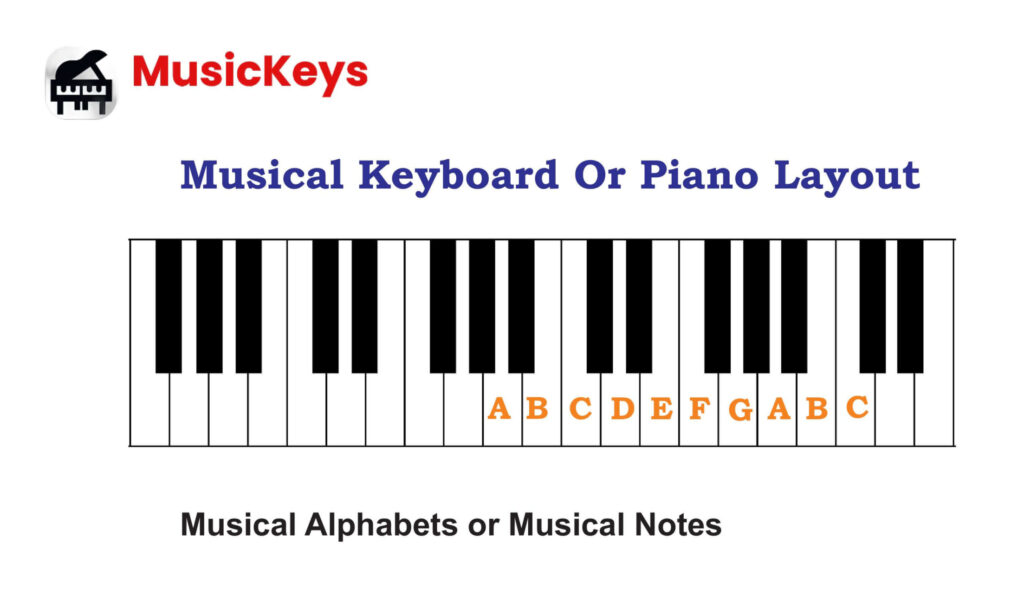
When you look at a musical keyboard, you will see many white keys and black keys.
If you observe carefully, you’ll notice a pattern — a group of two black keys followed by a group of three black keys.
Now, find the group of two black keys near the center of your keyboard.
Look at the first black key in that group, and just below it, towards the left, you’ll see a white key.
👉 That white key is called C.
From C, the musical alphabets go like this:
C, D, E, F, G, A, B, and then C again.
After G, there is no H — the sequence simply continues from A again.
These seven alphabets — C, D, E, F, G, A, B — are called Musical Alphabets or Musical Notes.
Memorize these positions. Once you can identify them, congratulations — you’ve already learned the basic notes on your keyboard!
(Insert Image 1: Diagram showing C, D, E, F, G, A, B keys clearly labeled.)
🎶 2. Understanding Indian Music Notation (Sargam)
Now that you know the musical alphabets, let’s connect them with the Indian music system — the Sargam.
In Indian notation, the same notes are named as:
Sa, Re, Ga, Ma, Pa, Da, Ne, Sa.
So:
C = Sa
D = Re
E = Ga
F = Ma
G = Pa
A = Da
B = Ne
C = Sa (higher)
Both systems — the Western alphabets and the Indian Sargam — mean the same thing but are written differently.
Learning both helps you understand music faster and play any song easily.
🎹 3. Get to Know Your Fingers
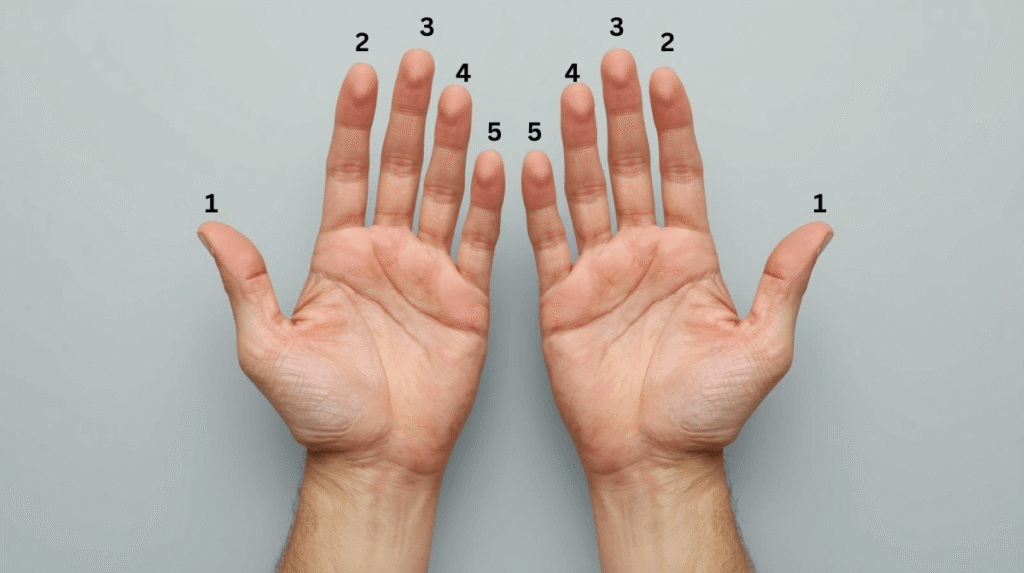
Before you start playing, it’s important to know your finger numbers.
👉 Here’s how they are counted:
Thumb = Finger 1
Index = Finger 2
Middle = Finger 3
Ring = Finger 4
Little finger = Finger 5
This numbering is the same for both hands.
Knowing which finger to use helps you play smoothly and develop control.
🎵 4. Your First Scale — The C Major Scale (Sa Re Ga Ma Pa Da Ne Sa)
Now it’s time to play your first musical scale!
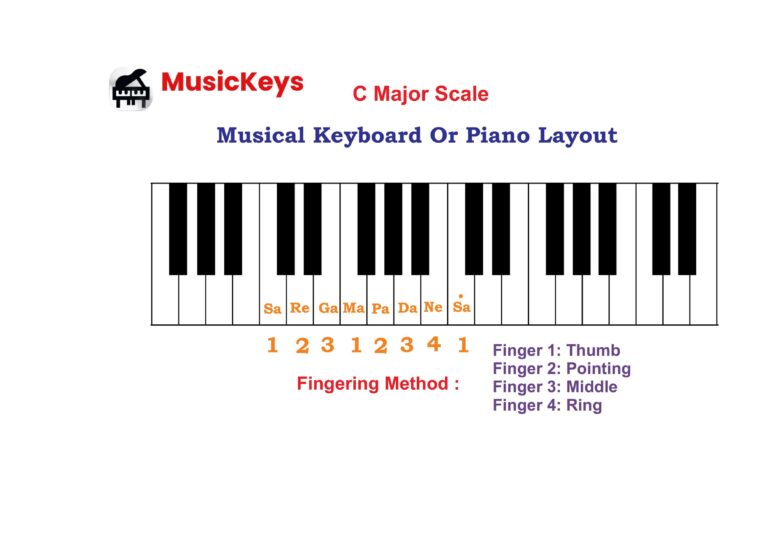
The sequence Sa, Re, Ga, Ma, Pa, Da, Ne, Sa (or C, D, E, F, G, A, B, C) is called the C Major Scale.
Why is it called “C Major”?
Because it starts with the note C (Sa) — your first white key at the center of the keyboard.
Here’s how to play it step by step with your right hand:
🎹 Ascending (Upward):
Play Sa (C) with Thumb – Finger 1
Play Re (D) with Index – Finger 2
Play Ga (E) with Middle – Finger 3
Now cross your Thumb (Finger 1) under and play Ma (F)
Continue Pa (G) with Finger 2, Da (A) with Finger 3, Ne (B) with Finger 4, and Sa (C) with Finger 5.
🎹 Descending (Downward):
Play the same notes backward using the same finger positions.
This is the best method to practice your C Major Scale correctly.
🎧 5. Practice Makes Progress
Practice this exercise at least 20 times per session.
Your fingers will gradually become stronger and more flexible, and your playing will start to feel natural.
Every time you repeat the scale, you’re building muscle memory — your fingers will begin to move smoothly without thinking.
And remember: 🎶
Don’t just press the keys — listen to the sound you create.
Hearing each note clearly is just as important as playing it.
Train your ears and your hands together.
With a few days of regular practice, you’ll notice your improvement — and soon, you’ll be ready for your next lesson!
🌟 6. What You’ve Learned Today
✅ Found the first note “C” on your keyboard
✅ Learned the musical alphabets (C to B)
✅ Understood the Indian Sargam (Sa to Sa)
✅ Learned finger numbers
✅ Practiced the C Major Scale correctly
That’s your first big step into music! Keep practicing — and let your fingers sing.
🎯 Conclusion
Learning the keyboard starts with simple steps — finding notes, understanding patterns, and building good habits.
Be patient, practice regularly, and enjoy every sound you play.
At MusicKeys and OctaveZone, we make learning piano easy and fun using the Indian notation system (Sargam) along with step-by-step practical lessons.
🎶 Start your musical journey today — one note at a time!
As an Amazon Associate, we may earn from qualifying purchases. This comes at no extra cost to you and helps us keep sharing quality musical content and tutorials.
